Dredging Days 2026: A shift towards participation and dialogue
Since its inception in the 1980s, Dredging Days has served as a platform for exchanging technical knowledge within the dredging community. The event was established to bring together contractors, clients, researchers and consultants to share new insights, research developments and practical experience from across the sector.
Over time, the format has evolved. While peer-reviewed academic papers remain a core component of the programme, recent editions have placed greater emphasis on interactive sessions to encourage dialogue across disciplines.
Speaking to CEDA Industry News, Dirk Roukema, Chairman of the Dredging Days organising committee and Dredging and Marine Works Expert at Port Consultants Rotterdam BV, said this shift reflects a deliberate effort to move beyond traditional presentation formats and create space for broader participation.
“The core has always been to get people together and discuss what is happening in the industry, not only with direct colleagues, but across the community,” explains Roukema.
The 2026 edition continues this approach, placing participation and structured discussion at the centre of the programme.
From technical papers to active participation
Peer-reviewed papers remain a longstanding feature of Dredging Days, reflecting the event’s academic roots and its commitment to technical depth. Research findings, case studies and methodological developments continue to form part of the programme.
The programme reflects this breadth of discussion, with sessions covering topics such as monitoring of dredging works, port construction and maintenance, and dredging technologies, alongside wider issues including decarbonisation, the EU Emissions Trading System and nature-based solutions. Other sessions focus on project delivery and industry practice, addressing themes such as cost drivers, specification gaps and the factors that can influence project outcomes.
However, the structure of the event has broadened. In recent editions, interactive sessions have come to represent a significant proportion of the agenda. These include panel discussions, structured group exercises and scenario-based debates designed to encourage delegates to contribute directly.
Roukema said the intention is to move beyond traditional one-directional formats. “We are very much trying to get people as active as possible,” he said. “Not only contractors talking to contractors, or researchers talking to researchers, but bringing the community together and encouraging discussion beyond traditional boundaries.”
This shift in format has been developed progressively. Mike Van der Vijver, Session Designer for Dredging Days 2026, explained that earlier editions followed a more traditional conference structure, with limited interaction between participants. Over time, the programme has been redesigned to increase engagement and improve the overall dynamic within sessions.
“We really overhauled the entire programme,” he said. “What we’re seeing now is that people are actively involved, rather than just listening.”
Interactive formats now include structured group discussions, role-based exercises and plenary sessions where participants work in smaller groups before sharing outcomes more widely. According to Van der Vijver, this approach helps create a more engaged environment where participants contribute their perspectives.
“It’s not about a stage and an audience,” he said. “It’s about an audience who maybe needs a bit of input from the stage to get going.”
The programme will also include sessions held outside the main congress halls, with small groups of delegates taken into the zoo setting to encourage a different dynamic of discussion.
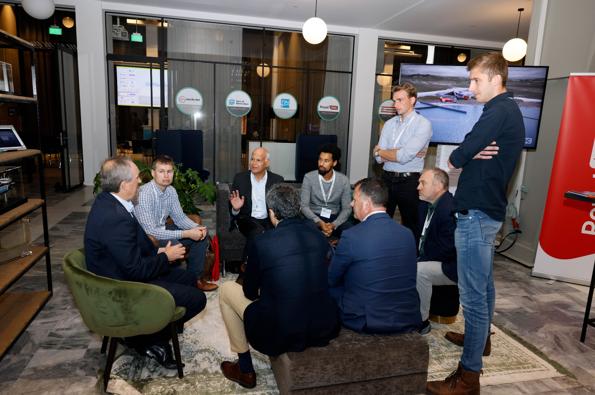
Dredging days participation photo (Image credit: CEDA)
Creating space for discussion
Alongside its technical content, Dredging Days also provides a forum for discussing issues that extend beyond purely scientific or engineering considerations. While research remains central to the programme, many of the challenges faced within the dredging sector relate to how projects are planned, delivered and managed in practice.
Van der Vijver explained that not all aspects of the industry can be addressed through technical presentations alone. “There’s a completely different kind of complexity,” he said, referring to how organisations operate, how client–supplier relationships function, and how decisions are made in real project environments.
As a result, the programme includes sessions designed to explore topics such as procurement approaches, contractual arrangements and collaboration between stakeholders. These discussions allow participants to examine practical challenges from multiple perspectives, rather than approaching them through a single technical lens.
“You can only get to the solution by talking about all of those complex issues,” Van der Vijver said.
By creating space for these conversations, the event enables delegates to share experience and reflect on how different approaches may be applied across projects and organisations.
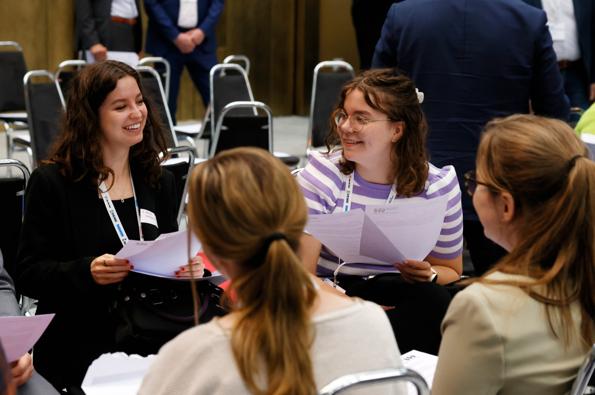
Dredging days participation activity (Image credit: CEDA)
The community dimension
Alongside the structured programme, Dredging Days also places emphasis on informal interaction between participants. Central to this is the “clubhouse” concept, where partners host shared spaces designed to facilitate conversation outside the formal sessions.
Rather than functioning as a traditional exhibition or trade fair, these areas are intended to provide a more open environment for discussion. Participants can meet colleagues, continue conversations from earlier sessions or exchange perspectives in a less structured setting.
Van der Vijver said the intention is to create space for genuine dialogue without a commercial focus. “There are no corporate brochures,” he said. “I’m not going to try and push anything. What we want is to have a good conversation. Here’s a cup of coffee, tell me what’s on your mind.”
Roukema said these informal interactions are an important part of the overall experience. Delegates often use the shared spaces to continue discussions from earlier sessions or explore topics with new contacts they have met during the day.
This informal element complements the technical and interactive parts of the programme, allowing delegates to engage with one another in different ways throughout the event.
Looking ahead to Dredging Days 2026
By bringing together professionals from across the sector, the event offers an opportunity to encounter ideas and viewpoints that may fall outside one’s day-to-day area of work.
Van der Vijver said that the event is designed to leave delegates with both new relationships and a broader understanding of the sector. “Establish new relationships, get to know more people, connect with different people that you didn’t know before,” he said, adding that participants should also leave with insights they can apply in their own work.
Roukema said that delegates are encouraged to explore a broad range of sessions, particularly those beyond their immediate field of expertise. With topics spanning multiple aspects of dredging and marine works, the programme aims to provide insight into the sector's broader landscape.
“Try to make it as diverse as you can for yourself,” he said. “That will give the best overview of what is happening in the industry”.
As preparations continue for the 2026 edition, organisers hope the event will once again provide a setting where participants can exchange ideas, reconnect with colleagues and gain fresh perspectives to bring back to their own organisations.
CEDA Dredging Days will take place from 11-13 May in Antwerp. For more details and to register, please visit the website: https://ceda.eventsair.com/dd26/
While the advice given in this editorial content has been developed using the best information available, it is intended purely as guidance to be used at the user’s own risk. No responsibility is accepted by CEDA or by the Intent Communications Ltd or by any person, firm, corporation or organisation who or which has been in any way concerned with the furnishing of information or data, the compilation, publication or any translation, supply or sale of this Guidance for the accuracy of any information or advice given herein or for any omission herefrom or from any consequences whatsoever resulting directly or indirectly from compliance with or adoption of guidance contained therein even if caused by a failure to exercise reasonable care.